A Startling Incident in a Historic Nuclear Zone
Few locations in modern history stir as much intrigue and concern as the Chernobyl Exclusion Zone. Known globally for the catastrophic 1986 nuclear disaster, Chernobyl has once again become the focus of international attention—not because of an industrial accident, but following a deliberate military operation. On February 14, 2025, a drone carrying a high-explosive warhead struck the protective outer shell of the New Safe Confinement (NSC) structure designed to contain Reactor No. 4.
This unprecedented incident immediately raised an array of questions regarding accountability, the safety of nuclear sites, and the broader implications of modern warfare. The dramatic nature of the event, combined with its complex political undertones, has spurred numerous debates on who is truly behind the attack and what it signifies for global nuclear security.
Contextualizing Chernobyl: History Meets Modern Warfare
The legacy of Chernobyl is firmly embedded in the public consciousness as a symbol of both technological hubris and human error. The disaster of 1986 was the result of a perfect storm combining flawed reactor design with critical operational mistakes, leaving a lasting environmental and humanitarian impact. Resources such as the comprehensive entry on Wikipedia detail the myriad factors contributing to that tragedy.
Today, however, Chernobyl’s narrative is evolving. The current drone strike, which damaged the NSC, marks a shift from an industrial accident toward an act of deliberate military aggression, with profound implications for nuclear safety. The NSC, completed in 2019 to encapsulate the radioactive remains, is designed to withstand external threats—a fact that has provided some reassurance as radiation levels, as confirmed by the International Atomic Energy Agency (IAEA), remain stable post-attack.
The 2025 Drone Strike: Timeline and Technical Breakdown
In the early hours of February 14, 2025, local reports described a powerful explosion near the Chernobyl site. According to multiple reputable sources including Reuters and BBC News, a precision-guided drone struck the outer shell of the NSC at approximately 1:50 AM local time.
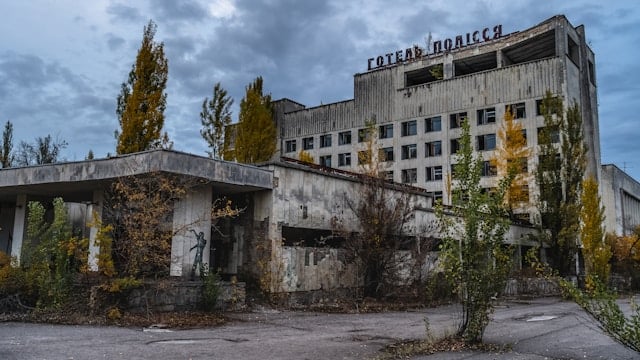
 Image Credit: Wikimedia Commons
Despite initial concerns, the drone’s strike caused only limited structural damage. Experts noted that while the outer cladding of the NSC and parts of the Main Cranes System were affected, robust safety measures prevented any breach of the inner containment systems. The rapid response in extinguishing the resulting fire further ensured that radioactivity levels did not spike, thus averting a potential humanitarian or environmental crisis. Detailed technical insights into these safety protocols can be found on the IAEA website.
Technical analyses have highlighted that the drone likely bore a high-explosive payload and was equipped with sophisticated reconnaissance capabilities. Such drones, similar in design to the Bayraktar TB2—which has been widely reported in the context of the ongoing conflict between Russia and Ukraine—are known for their precision in executing military operations. These findings underpin the assertion that the strike was a calculated act with symbolic overtones rather than a random attack.
Allegations, Denials, and Conflicting Narratives
As news of the Chernobyl drone strike spread, divergent narratives quickly emerged. Ukrainian authorities have been unequivocal, attributing the attack to Russian military forces. This claim is supported by tactical details such as the timing of the strike and the technical specifications of the drone, which closely match those used in previous operations associated with Russian aggression. In public statements and through social media channels like Telegram, Ukrainian officials have linked this attack to a broader campaign aimed at destabilizing key Ukrainian infrastructure.
In direct contrast, Russian officials have consistently denied any involvement. Prominent figures such as Kremlin spokesperson Dmitry Peskov have characterized the accusations as politically motivated disinformation designed to vilify Russia. These denials are part of a wider information campaign, where both sides seek to shape public opinion to suit strategic interests. For a balanced view of these debates, readers can refer to real-time updates on reputable media platforms like Reuters and BBC News.
Key Points of Contention
- Ukrainian Evidence: Intelligence data, intercepted communications, and the drone’s flight path have all been cited as proof of Russian involvement. The timing and technical characteristics of the drone match those observed in other Russian-led operations.
- Russian Denials: Russian officials argue that there is no substantive evidence to substantiate these claims, and they suggest that the incident could be a false flag operation aimed at sowing discord within Ukraine.
- Independent Analysis: Experts from organizations such as Jane’s Defence and Defense News have noted that the characteristics of the drone and the operational tactics observed align with modern warfare practices, though attributions remain disputed.
Nuclear Security in Modern Conflict Zones
The Chernobyl incident underscores the persistent challenges associated with protecting nuclear facilities during times of conflict. The NSC was constructed as a critical barrier to contain radioactive materials following the 1986 disaster; however, its vulnerability to modern drone strikes has now been brought into sharp focus. Experts stress that any military action in the vicinity of such sensitive sites carries disproportionate risks, potentially triggering international crises.
The International Atomic Energy Agency continues to advocate for strict military restraint around nuclear installations. Recent dialogues at forums such as the Munich Security Conference have reiterated that attacks on facilities like Chernobyl could set dangerous precedents, eroding established nuclear safety norms. For an in-depth look at nuclear security protocols, visit our internal resource on Nuclear Security Best Practices.
Moreover, the lessons learned from Chernobyl are applicable globally. Whether it is through upgrading physical security measures or incorporating advanced electronic surveillance, the importance of robust defense mechanisms cannot be overstated. Agencies such as the National Nuclear Security Administration (NNSA) play a pivotal role in these efforts, ensuring that nuclear assets remain secure amid evolving military threats.
Navigating Misinformation in the Age of Digital Warfare
In today’s digital landscape, rapid information dissemination often leads to the spread of misinformation and alternative theories. Following the Chernobyl drone strike, social media platforms were awash with conflicting reports, ranging from claims of covert sabotage to bizarre alternative narratives. This flood of unverified information makes it increasingly challenging to parse fact from fiction.
To counter these challenges, experts emphasize the importance of relying on credible sources. For instance, investigations by organizations such as the IAEA and independent monitoring by trusted media outlets like Reuters provide reliable insights. By cross-referencing such authoritative resources and maintaining a skeptical stance toward unverified claims, it becomes easier to navigate the murky waters of modern information warfare.
Additionally, effective content strategies—such as embedding natural links within high-quality articles—play a critical role. Techniques like using descriptive anchor texts (e.g., linking to comprehensive resources on Chernobyl history) and ensuring contextual relevance help both users and search engines identify credible information. For further guidance on natural link placement, check out our insights at The Age of Drone Warfare.
Global Reactions and Geopolitical Implications
The ramifications of the drone strike extend well beyond the physical damage inflicted on the Chernobyl site. On the international stage, the incident has reignited debates over nuclear safety and the ethical boundaries of modern warfare. Leaders and policymakers from both sides of the conflict have used this event to underscore their positions, with the strike serving as a stark reminder of the risks posed by advanced military technologies.
For instance, Ukrainian President Volodymyr Zelenskyy has labeled the attack a terrorist act aimed at destabilizing not only Ukraine but also regional security. Such statements have been widely reported by global news agencies including BBC News and Reuters. Meanwhile, international conferences such as the Atlantic Council have discussed the broader impacts of such military actions, highlighting the increasing intersection between geopolitics and nuclear risk.
Equally important are the diplomatic implications. Peace negotiations, including recent efforts spearheaded by prominent political figures, have been complicated by the strike. The incident not only stalls any potential dialogue but also raises significant concerns about the possibility of further escalation. This interplay between military actions and diplomacy will undoubtedly shape discussions on global security in the coming years.
Future-Proofing Nuclear Security Amid Evolving Drone Warfare
As the frequency and sophistication of drone warfare increase, so does the urgency of reassessing and bolstering security measures around vulnerable nuclear facilities. The Chernobyl drone strike serves as a stark example of the challenge at hand. Strategists and security experts are now calling for the implementation of advanced surveillance systems and automated defense mechanisms, designed to detect and neutralize threats in real time.
In response, technological innovations are being explored by government and private sectors alike. For example, next-generation sensor networks and rapid response protocols are being integrated into nuclear sites

